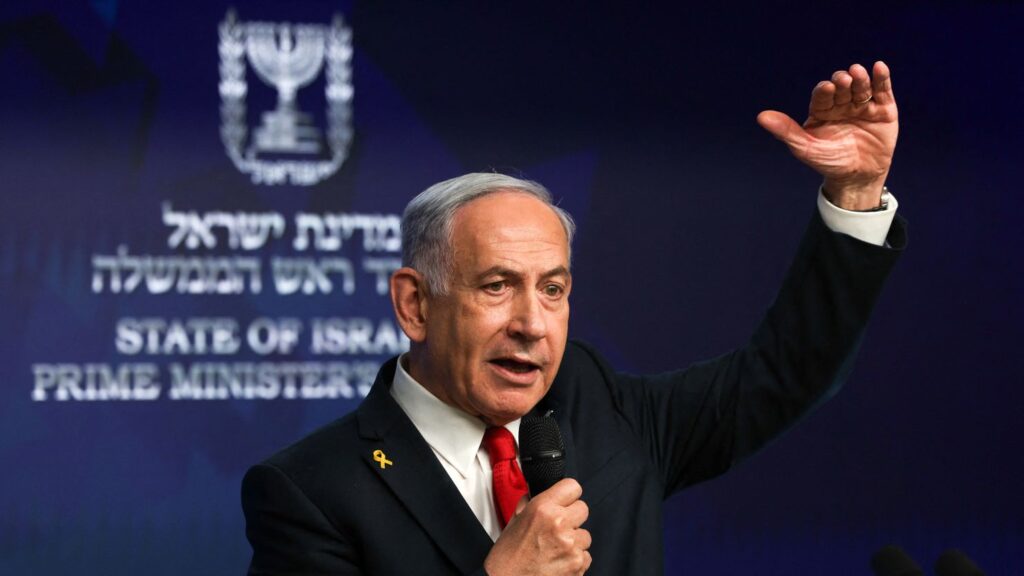
Prime Minister Benjamin Netanyahu’s meeting with President Donald Trump Monday marks his third time at the White House since January. Unlike the previous two episodes, there were no public events on the schedule – potentially leaving the two leaders’ highly consequential Middle East discussion entirely private.
The difference underscores Trump’s parallel approaches to his Israeli counterpart. Even as he pulls Netanyahu close, joining Israel’s war on Iran and calling for Netanyahu’s corruption trial to be canceled, he is applying pressure on the prime minister to do something for him: end the war in Gaza.
For Trump, a deal ending the 21-month conflict in Gaza would be another data point in both his effort to win a Nobel Peace Prize and his long-running and highly difficult quest to cement peace in the Middle East as part of his legacy. He clearly sees Netanyahu as a critical ally in that goal, though the president has occasionally lashed out at the Israeli leader when he appeared to become an obstacle instead. Now, Trump needs both Hamas and Netanyahu to agree to terms each has previously rejected, namely language about whether the ceasefire will end the war altogether.
After months of halting progress, there does appear to be new momentum toward a deal. Trump simply needs to ensure, potentially by exerting additional pressure on Netanyahu during the White House visit, that it doesn’t fall apart.
“The president could put pressure on the prime minister, but can also give enticements, the carrots, if you will,” said Michael Oren, the former Israeli ambassador to the United States. “One of them would be keeping a military option on the table vis-a-vis Iran, if Iran tries to rebuild some of those destroyed or obliterated nuclear facilities – a very difficult decision given the depth of American opposition, of the public, to further American military involvement in Iran.”
Continue reading the complete article on the original source