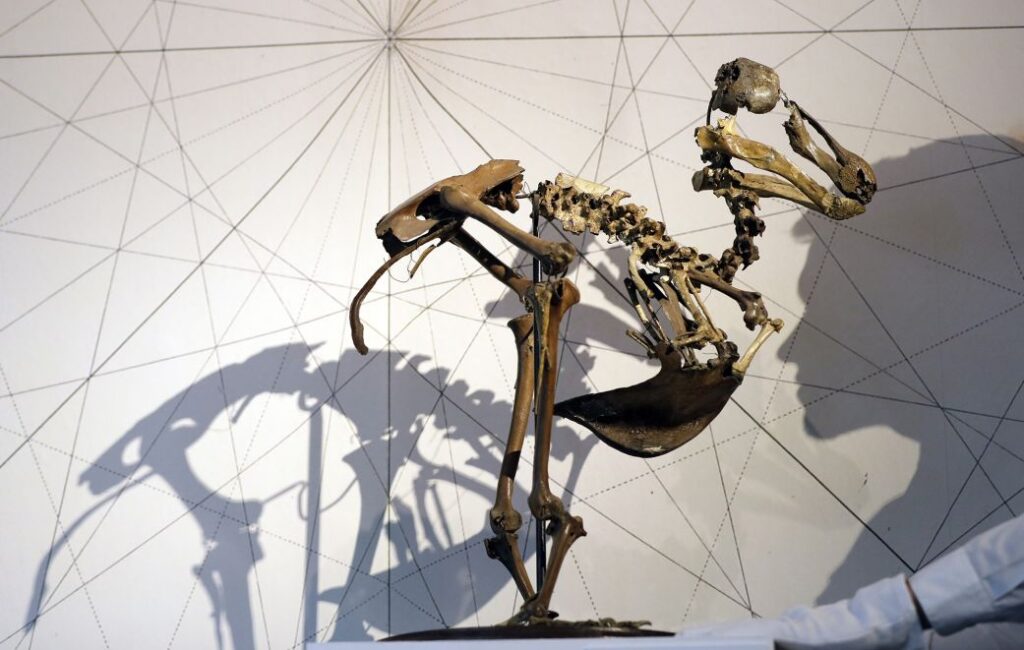
Humans have wiped out more than 100 species — with many more on the brink or experiencing large declines in population.
Some scientists have argued that we have entered a “sixth mass extinction” event akin to the one that wiped out dinosaurs 66 million years ago. But this time the culprit is biological annihilation caused by humans rather than a city-size asteroid.
A new study published Thursday in the journal PLOS Biology argues, however, that while the decline in biodiversity is real, insects, plants and animals are not disappearing at rates anywhere near approaching a mass extinction, a phenomenon typically defined by the loss of 75% of all species over an geological interval of time. Only five mass extinctions have occurred over the 4.5 billion years of Earth’s history.
Instead, the study argues, recent extinctions of plant and animal groups are rare and often confined to island habitats. What’s more, rates of extinction may be decelerating, in part due to intensifying conservation efforts, particularly for mammals and birds.
“One thing we emphasize, every single one of these extinctions is a tragedy and should never have happened and should not happen in the future,” said study author John Wiens, a professor of ecology and evolutionary biology at the University of Arizona.
Continue reading the complete article on the original source