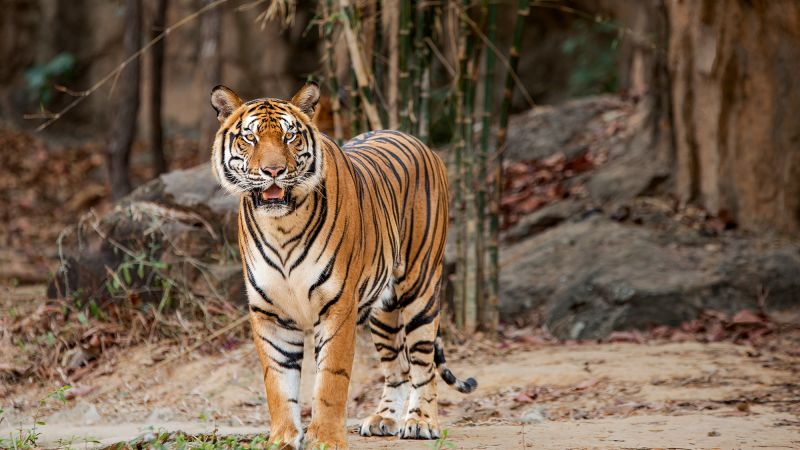
Deep in the evergreen jungle of Thailand’s Dong Phayayen-Khao Yai Forest Complex (DPKY-FC), a spring-loaded trap is waiting to catch a tiger.
No one knows exactly when the animal will return to mark its scent again — in a week or two, maybe longer — so the trap must be checked three times a day.
Luckily for the big cat, this trap isn’t set by poachers: it’s the work of conservationists, trying to save the species.
“It’s a lot of time and effort to trap a tiger,” says Rattapan Pattanarangsan, a conservation program manager at the nonprofit Panthera Thailand. But with just 20 to 30 tigers roaming the 6,000-square-kilometer (2,317-square-mile) DPKY-FC, this effort is essential to protecting the “last of the last” of its Indochinese tigers, a population that was only discovered in the early 2000s.
Thailand is a rare example of tiger recovery in Southeast Asia, but most of that has taken place in the country’s Western Forest Complex, where tiger populations more than tripled between 2007 and 2023.
Continue reading the complete article on the original source