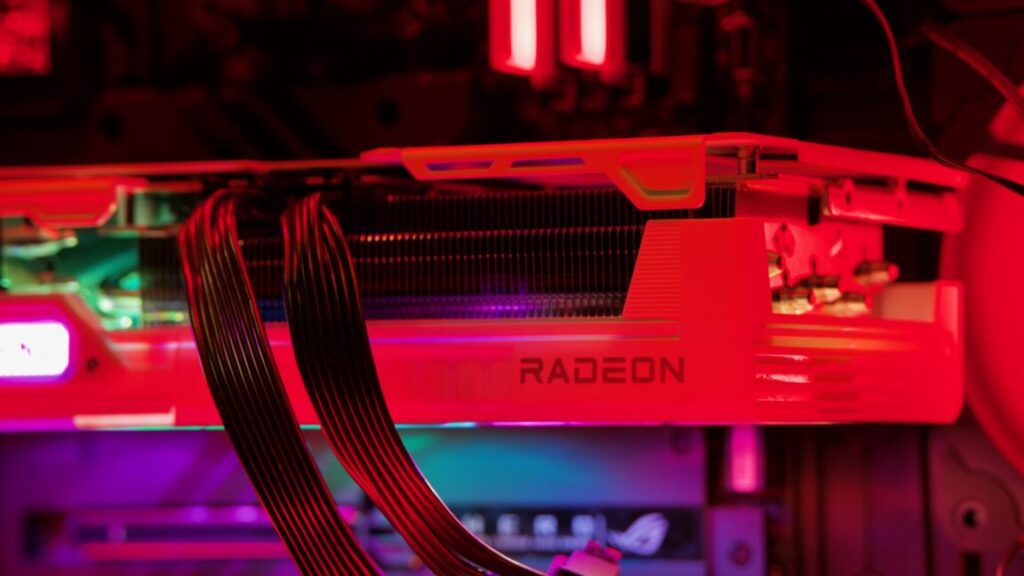
I wrote a couple of weeks ago about my personal homebrew Steam Machine, a self-built desktop under my TV featuring an AMD Ryzen 7 8700G processor and a Radeon 780M integrated GPU. I wouldn’t recommend making your own version of this build, especially with RAM prices as they currently are, but there are all kinds of inexpensive mini PCs on Amazon with the same GPU, and they’ll all be pretty good at playing the kinds of games that already run well on the less-powerful Steam Deck. But this kind of hardware is an imperfect proxy for the Steam Machine that Valve plans to launch sometime next year—that box will include a dedicated GPU with 8GB of dedicated video memory, presenting both benefits and possible pitfalls compared to a system with an integrated GPU. As a last pre-Steam Machine follow-up to our coverage so far, we’ve run tests on several games we test regularly in our GPU reviews to get a sense of how current versions of SteamOS stack up to Windows running on the same hardware. What we’ve found so far is basically the inverse of what we found when comparing handhelds: Windows usually has an edge on SteamOS’s performance, and sometimes that gap is quite large. And SteamOS also exacerbates problems with 8GB GPUs, hitting apparent RAM limits in more games and at lower resolutions compared to Windows. Our testbed(s) Windows vs. SteamOS testbed CPU AMD Ryzen 7 7700X (provided by AMD) Motherboard ASRock B650 Pro RS (provided by AMD) RAM 32GB (2x16GB) G.Skill Trident Z5 Neo RGB series (provided by AMD), running at DDR5-6000 SSD 1TB Western Digital SN850 Power supply EVGA Supernova 850 P6 (provided by EVGA) CPU cooler 280mm Corsair iCue H115i Elite Cappelix AIO Case Lian Li O11 Air Mini OS Windows 11 25H2 with Core Isolation on, Memory Integrity off SteamOS 3.9 (Main channel, build 20251124.1000) Drivers Windows: AMD Adrenalin 25.11.1 SteamOS: Video Driver 4.6, Mesa 25.2.0 When we test GPUs, our goal is to have the best possible CPU, motherboard, and other components built around it so we can measure the graphics card’s performance without running into bottlenecks from anything else.
Continue reading the complete article on the original source