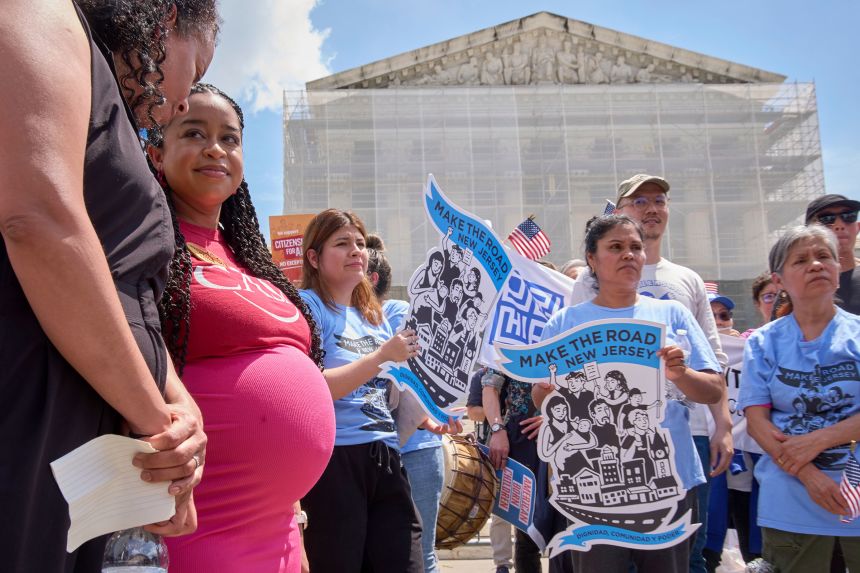
The Supreme Court agreed Friday to decide if President Donald Trump’s attempt to end birthright citizenship with an executive order is constitutional, offering the justices an opportunity to revisit what has widely been considered settled law since the 19th Century.
By granting the appeal, the court is directly taking on the merits of a controversy that it largely avoided earlier this year, when it sided with Trump on technical grounds dealing with how the challenges to the policy were handled by lower courts.
Cecillia Wang, national legal director for the American Civil Liberties Union said the organization looks forward to the Supreme Court “putting this issue to rest once and for all.”
“The federal courts have unanimously held that President Trump’s executive order is contrary to the Constitution, a Supreme Court decision from 1898, and a law enacted by Congress,” she added.
Though the legal theories advanced by the Trump administration’s appeal have long been considered fringe even by many conservatives, the case will nevertheless draw considerable public focus to the Supreme Court term that began this fall. It is yet another test of the court’s willingness to embrace a boundary-pushing legal argument from the White House.
Continue reading the complete article on the original source