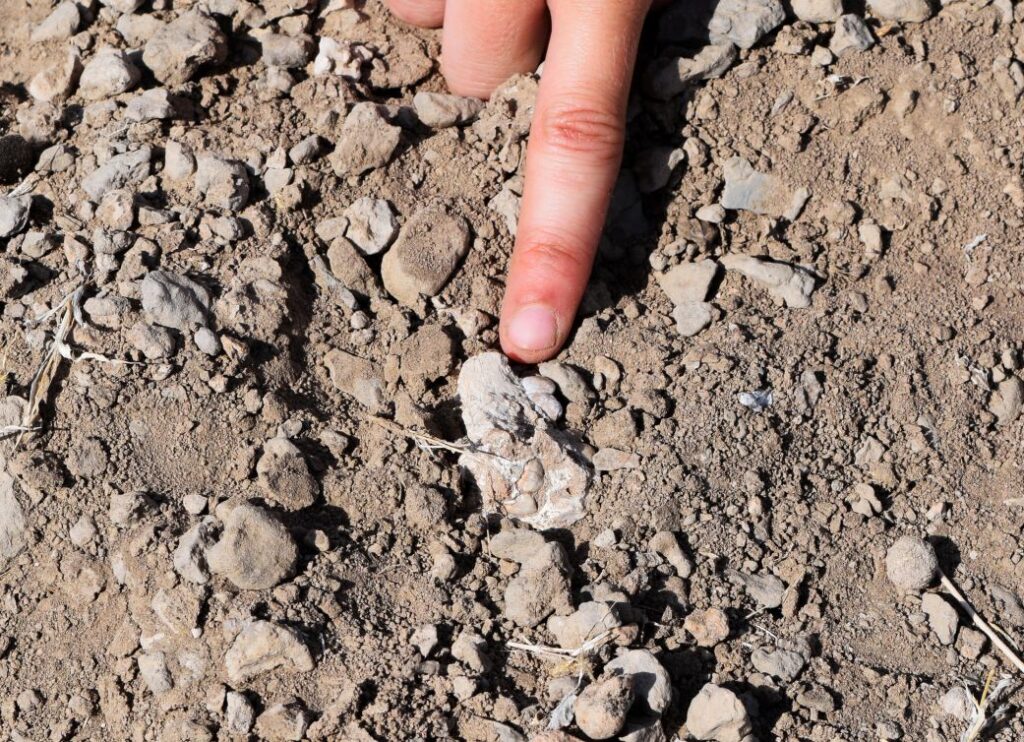
Scientists say they have solved the mystery of the Burtele foot, a set of 3.4 million-year-old bones found in Ethiopia in 2009. The fossils, along with others unearthed more recently, have now been linked to a little-known species that was a contemporary of the celebrated Australopithecus afarensis skeleton Lucy.
The foot bones and a jawbone with teeth still attached belonged to an ancient human relative called Australopithecus deyiremeda, a more primitive species than Lucy, according to a study published November 26 in the journal Nature.
Should they hold up to further scrutiny, the findings could knock Lucy, one of the most recognizable names in human evolution, from her important spot in the family tree.
In 2009, a team led by paleoanthropologist Yohannes Haile-Selassie, a professor at Arizona State University and the study’s lead author, found the eight foot bones within 3.4 million-year-old sediments at the Burtele locality at Woranso-Mille in Ethiopia’s Afar region. The site is close to where Lucy’s partial skeleton was discovered in 1974.
The team knew the foot came from a different species than Lucy’s because it had an opposable toe, suggesting it had a greater ability to grasp and would have easily climbed trees. However, there wasn’t enough information to name a new species based on the foot fossils alone.
Continue reading the complete article on the original source