EDITOR’S NOTE: Call to Earth is a CNN editorial series committed to reporting on the environmental challenges facing our planet, together with the solutions. Rolex’s Perpetual Planet Initiative has partnered with CNN to drive awareness and education around key sustainability issues and to inspire positive action.
Malati Mondal’s husband was killed by a tiger. He was attacked about a decade ago, as he went out fishing on a small raft through the mangroves. Living in the Sundarbans, the planet’s largest mangrove forest which straddles West Bengal, in India, and southern Bangladesh, it’s a risk communities increasingly face.
The UNESCO World Heritage site is a labyrinth of tidal waterways, mudflats and islands, home to an astonishing range of endangered species, including river dolphins, the Indian python and the Bengal tiger.
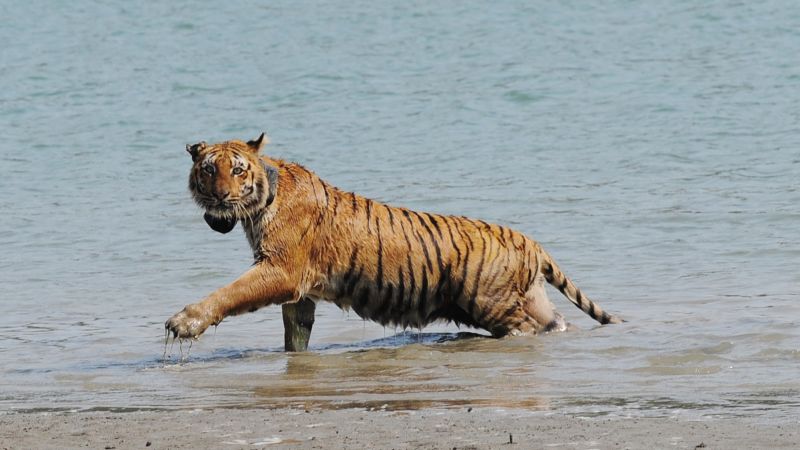
Unlike most big cats, these tigers live an amphibious lifestyle, swimming long distances to hunt fish and crabs. There are an estimated 125 living across the Sundarban region of Bangladesh, and around 88 on the Indian side. But a combination of shrinking tiger habitat due to deforestation and growing human populations has led to an increase in human-tiger conflict, according to conservationists.
There is more competition for food resources, says Saurav Malhotra, a project leader at international nonprofit Conservation International. Men, who venture deep into the forest to hunt for fish, are disproportionately attacked.
Continue reading the complete article on the original source