EDITOR’S NOTE: This CNN Travel series may have adjacent ads by the country it highlights. CNN retains full editorial control over subject matter, reporting and frequency of the articles and videos, in compliance with our policy.
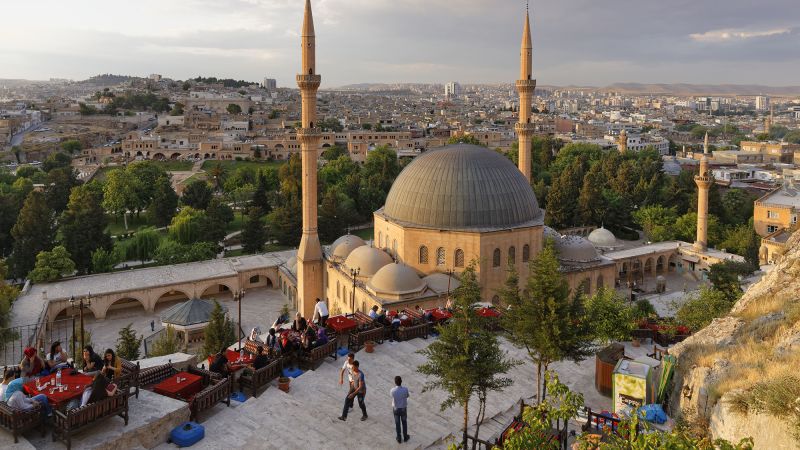
Under the shadow of a centuries-old castle in Şanlıurfa, in southeastern Turkey, black-spotted golden carp swim in turquoise pools. Tradition holds they were created after Mesopotamian king Nemrut bin Kenan threw the Prophet Ibrahim into a fire burning on the plain below, sometime in the third millennium BCE.
Preaching against idolatry and declaring there was only one god, Ibrahim (or Abraham, as he’s known by Jews and Christians) was a thorn in Nemrut’s side. As Nemrut believed himself a god, Ibrahim had to go. Two Roman columns, visible above the plain, mark the spot.
Şanlıurfa, 40 miles north of the Syrian border, was once part of upper Mesopotamia and home to dozens of civilizations — each leaving its mark.
The Aramaean confederacy of tribes called it Urhai, while the Seleucid Dynasty (while ruled from 312 to 64 BCE) used the name Edessa. After the Arabic conquest in the 7th century CE, it became Roha. The Ottomans, who conquered the city in the 16th century, renamed it Urfa in 1607.
Continue reading the complete article on the original source