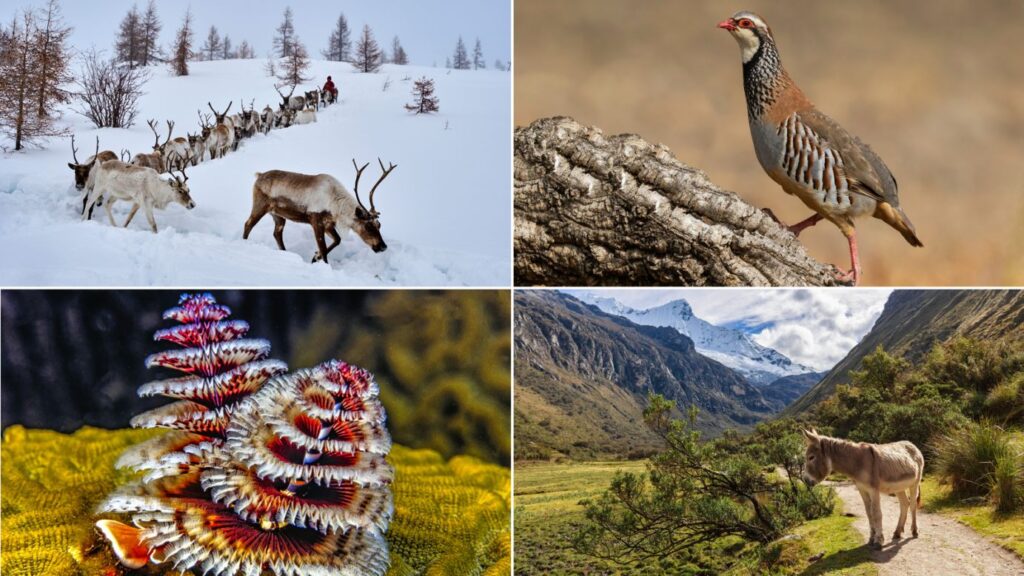
This year is not a particularly white Christmas. Across the United States, families are gathering to enjoy a walk on a warm, sunny day. The fingerprints of climate change are all over the 2025 holiday season, and we at CNN thought it would be a great time to find out how the animals that shape our stories and traditions are weathering the warmth.
From Santa’s reindeer and the Hanukkah armadillo to some very festive sea worms, our changing world is changing life for creatures great and small. And while some of these animals are struggling, a few may be key to helping us adapt to the future.
You’d think a species that already survived some of history’s most intense and rapid Arctic warming events would have the wherewithal to weather modern, human-driven climate change. Unfortunately, things are not looking good for reindeer, who soon could be as mythological as Santa’s elves.
Reindeer survived through the rapid warming that melted the last big Ice Age about 20,000 years ago. In Greenland, temperatures shot up by as much as 18 degrees Fahrenheit in a matter of decades, pushing other Arctic megafauna to extinction. But in the last 30 years, about 40% of the global reindeer population has been lost. It appears the adaptations that served the species well last time aren’t as effective today, according to a study published in August by researchers at the University of Adelaide, in Australia, and the University of Copenhagen.
Those scientists found that reindeer survived previous changes in the climate because they had spread into lots of different ecological niches. They could thrive in a small, cooler refuge and repopulate broader areas when things got cold again.
Continue reading the complete article on the original source