Human evolution’s biggest mystery, which emerged 15 years ago from a 60,000-year-old pinkie finger bone, finally started to unravel in 2025.
Analysis of DNA extracted from the fossil electrified the scientific community in 2010, when it revealed a previously unknown human population that had, in the distant past, encountered and interbred with our own species, Homo sapiens. This enigmatic group became known as the Denisovans after Denisova Cave in Siberia’s Altai Mountains, where the pinkie finger was found.
Despite intimate knowledge of this population’s genetic makeup, traces of which millions of people carry today, scientists knew nothing about the appearance of the Denisovans, or where they lived or why they disappeared. The discovery, and the questions it unleashed, galvanized a generation of geneticists, archaeologists and paleoanthropologists.
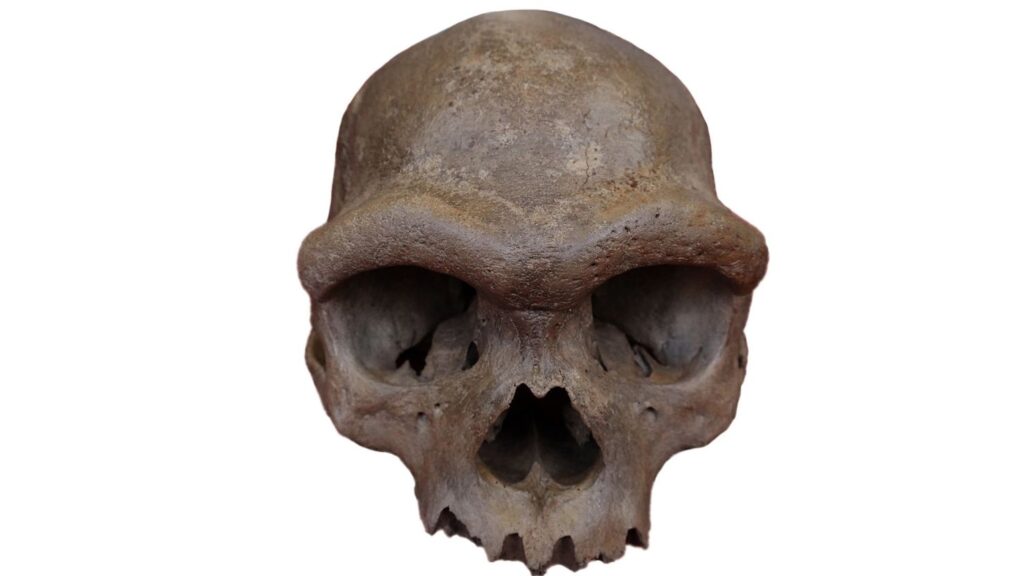
Some of that work paid off this year, and scientists at last put a face to the Denisovan name by extracting new clues from another well-known fossil: a prehistoric human skull that didn’t seem to fit with any known group. Now, other jigsaw pieces have begun to fall into place.
When the skull came to light in Harbin in northeastern China in 2018 after being stashed for safekeeping at the bottom of a well for decades, some scientists had a hunch that it might be Denisovan.
Continue reading the complete article on the original source