As “Auld Lang Syne” takes its annual spin around the globe on New Year’s Eve, its chorus belted out by revelers young and old, Edinburgh’s Poet Laureate Michael Pedersen says the song’s enduring power lies not in tradition alone, but in its uncanny ability to bind people together.
Pedersen, a prize-winning Scottish poet and author who is the current Writer in Residence at the University of Edinburgh and the city’s Makar, or Poet Laureate, told CNN that the song’s customary rendition at midnight on December 31 was never formally ordained — it simply felt right.
“For generations, it’s been sung at New Year because it’s perfect for it,” he said. “There’s nothing in the song that dictates it should be sung then. People just had an emotional compass for it. They gathered outside town halls and sang it, and it drifted — like a great, beautiful glacier of song — into that New Year position.”
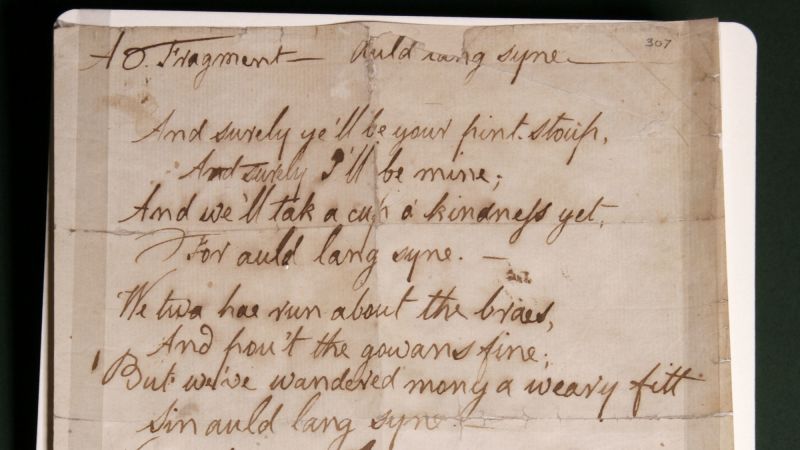
Despite its popularity, few would claim to know all the words to the song, first written down by Robert Burns in 1788 – but that has done little to dent its appeal.
The phrase “auld lang syne” translates loosely to “old, long since,” though Pedersen says a modern equivalent would be “for old times’ sake.” At its heart, he said, the song is “a tale that looks back at childhood friendship, rekindled with a handshake and a goodwill drink.”
Continue reading the complete article on the original source