Fossils unearthed in Morocco from a little-understood period of human evolution may help scientists resolve a long-standing mystery: Who came before us?
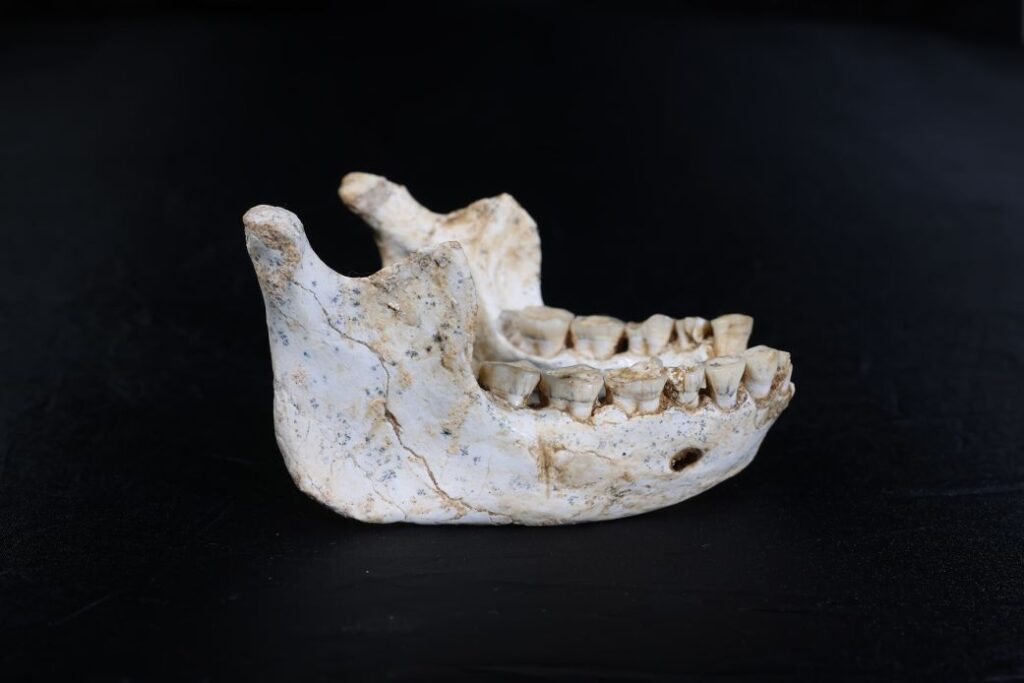
Three jawbones, including one from a child, teeth, vertebrae and a femur were unearthed from a cave known as Grotte à Hominidés in Thomas Quarry in Casablanca, Morocco, dating back 773,000 years. They are intriguing to scientists because they are the first hominin fossils from this period to have been discovered in Africa.
“There are a lot of fossil hominins in Africa until about a million years ago, but then after that there is a jump to around 500,000 years ago, and in this gap we have almost nothing,” said Jean-Jacques Hublin, an author of the study that published Wednesday in the scientific journal Nature.
“It is extremely exciting to have fossils right in the middle of this gap,” added Hublin, a paleoanthropologist at Collège de France and the Max Planck Institute for Evolutionary Anthropology in Leipzig, Germany.
CT scans and analysis of the fossils’ features revealed an ancestor who had a “mosaic” of primitive and more evolved features. For example, it didn’t have a defined chin, unlike Homo sapiens, but the teeth and other dental features were quite similar to those of our own species and Neanderthals.
Continue reading the complete article on the original source