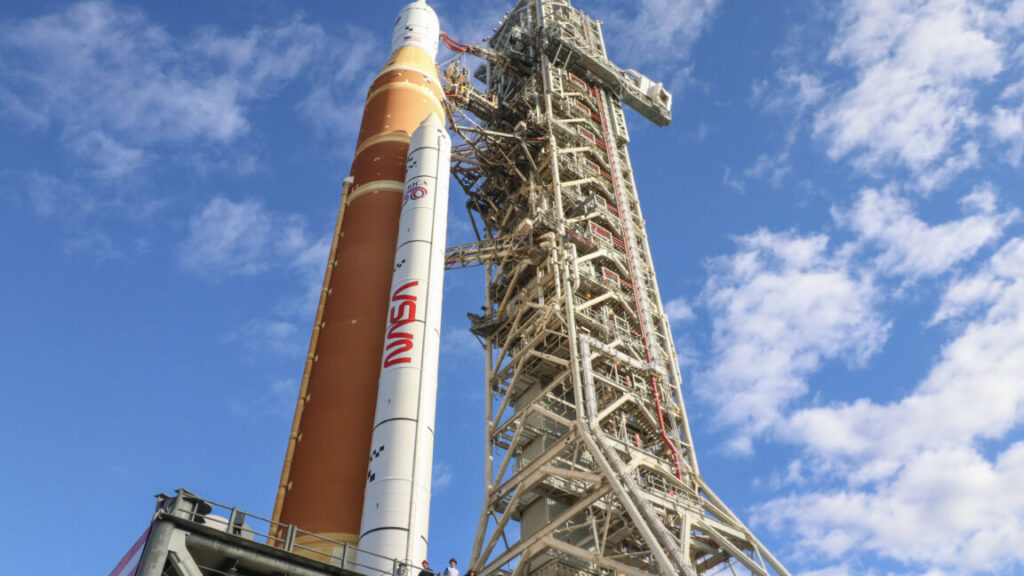
KENNEDY SPACE CENTER, Florida—Preparations for the first human spaceflight to the Moon in more than 50 years took a big step forward this weekend with the rollout of the Artemis II rocket to its launch pad. The rocket reached a top speed of just 1 mph on the four-mile, 12-hour journey from the Vehicle Assembly Building to Launch Complex 39B at NASA’s Kennedy Space Center in Florida. At the end of its nearly 10-day tour through cislunar space, the Orion capsule on top of the rocket will exceed 25,000 mph as it plunges into the atmosphere to bring its four-person crew back to Earth. “This is the start of a very long journey,” said NASA Administrator Jared Isaacman. “We ended our last human exploration of the moon on Apollo 17.” The Artemis II mission will set several notable human spaceflight records. Astronauts Reid Wiseman, Victor Glover, Christina Koch, and Jeremy Hansen will travel farther from Earth than any human in history. They won’t land. That distinction will fall to the next mission in line in NASA’s Artemis program. But the Artemis II astronauts will travel more than 4,000 miles beyond the far side of the Moon (the exact distance depends on the launch date), setting up for a human spaceflight speed record during their blazing reentry over the Pacific Ocean a few days later. Koch will become the first woman to fly to the vicinity of the Moon, and Hansen will be the first non-US astronaut to do the same. “We really are ready to go,” said Wiseman, the Artemis II commander, during Saturday’s rollout to the launch pad. “We were in a sim [in Houston] for about 10 hours yesterday doing our final capstone entry and landing sim. We got in T-38s last night and we flew to the Cape to be here for this momentous occasion.”
Continue reading the complete article on the original source