Minerals are back in the news, with President Donald Trump announcing on Wednesday that he’d reached an agreement on a possible deal on Greenland that would include rights to rare earth minerals.
Critical and rare earth minerals underpin technologies propelling the clean energy transition, AI and advanced military hardware, among others, and their production is dominated by China. It controls over 90% of the world’s output of refined rare earths and over 60% of rare earth mining production, according to the International Energy Agency.
Speaking to CNN last week at the Future Minerals Forum in Riyadh, Saudi Arabia, Abigail Hunter, executive director of the Minerals Center at SAFE (Securing America’s Future Energy), a nongovernment organization, described China as “light years ahead” of the US, “through decades of strategic investments, state-backed projects and coordination with the private sector, and investing internationally.”
But now Saudi Arabia is growing its mineral sector, to reduce its economic dependence on oil and, according to analysts, increase its geopolitical influence.
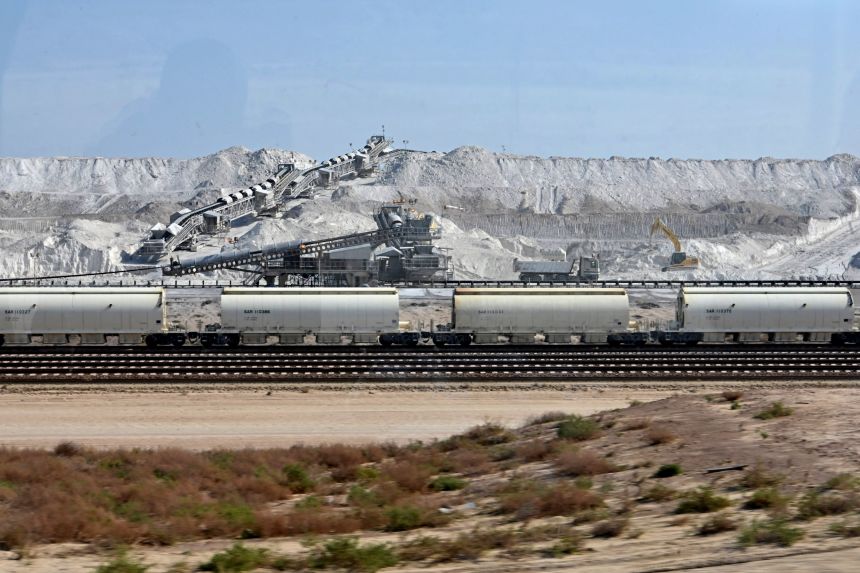
Saudi claims it has $2.5 trillion in mineral reserves. These include gold, zinc, copper and lithium, but also rare earth deposits, including dysprosium, terbium, neodymium and praseodymium, which are used in everything from electric cars and wind turbines to high-speed computing.
Continue reading the complete article on the original source