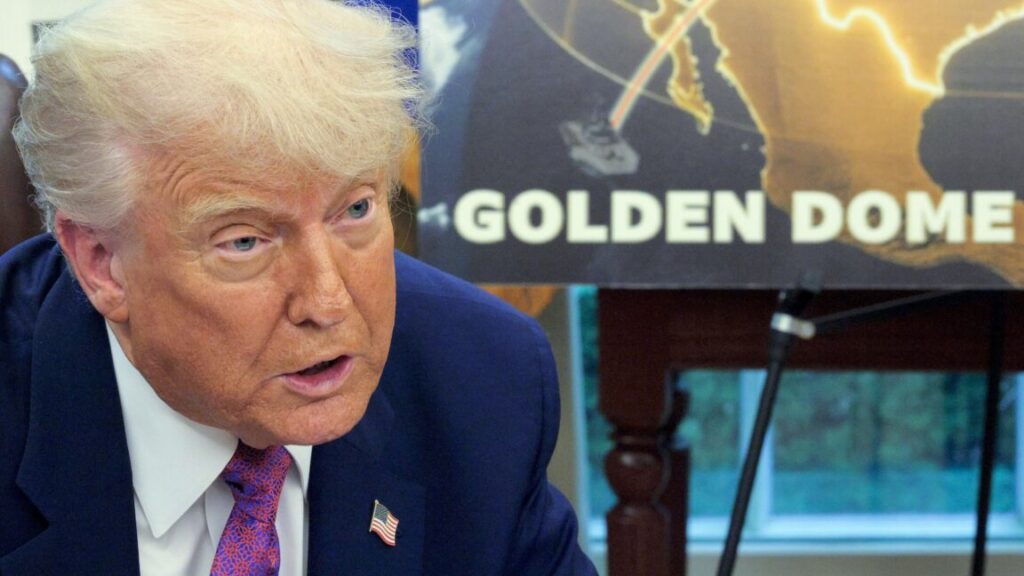
Gen. Michael Guetlein, the senior officer in charge of the US military’s planned Golden Dome missile defense shield, has laid out an audacious schedule for deploying a network of space-based sensors and interceptors by the end of President Donald Trump’s term in the White House. The three-year timeline is aggressive, with little margin for error in the event of budget or technological setbacks. The shield is designed to defend the US homeland against a range of long-range weapons, including intercontinental ballistic missiles (ICBMs), cruise missiles, and newer threats like hypersonic weapons and drones. “By the summer of ’28, we will be able to defend the entire nation against ballistic missiles, as well as other generation aerial threats, and we will continue to grow that architecture through 2035,” Guetlein said Friday in a presentation to representatives from the US defense industry. Supporters of Golden Dome say it is necessary to defend the United States against emerging threats from potential adversaries like Russia and China, each of which has a vast arsenal of ballistic missiles and more maneuverable hypersonic missiles that are difficult to detect and even harder to track and shoot down. Critics cite Golden Dome’s high cost and its potential to disrupt the global order, an eventuality they say would make the US homeland more prone to attack. Guetlein’s team is moving fast in many areas. The Pentagon has inked deals with companies to develop prototypes for space-based missile interceptors, and Golden Dome is underpinned by billions of dollars of preexisting investment in sensor technology, reusable launchers, and mass-produced satellites. These investments give Golden Dome a head start that former President Ronald Reagan’s similarly scoped Strategic Defense Initiative lacked in the 1980s. The initiative, nicknamed “Star Wars,” was drastically downsized as the Cold War wound down and the government struggled with ballooning costs and technical roadblocks.
Continue reading the complete article on the original source