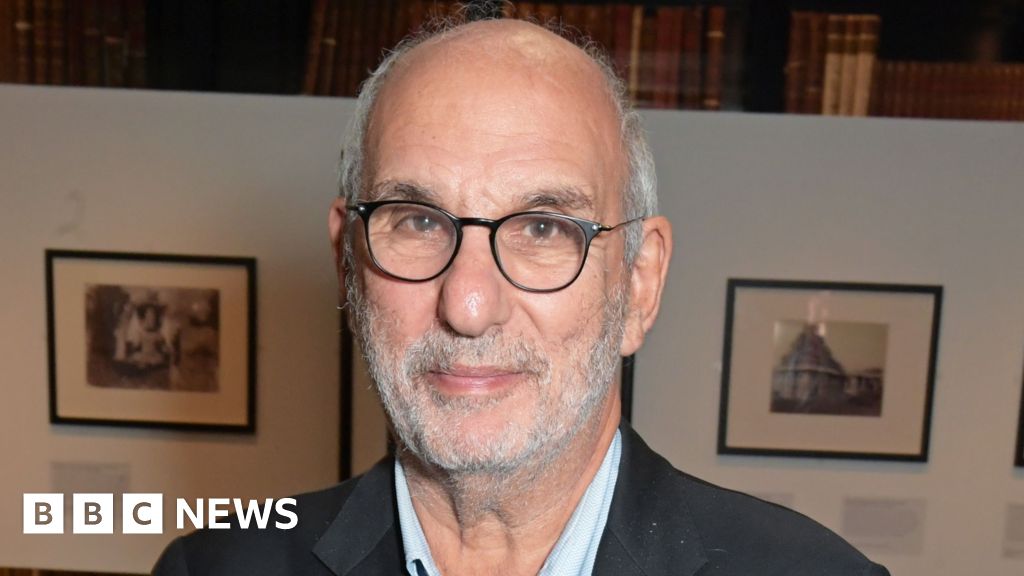
AFP via Getty ImagesThe US negotiators will be led by special envoy Steve Witkoff (left), while the Iranian team is headed by Foreign Minister Abbas AraghchiSenior US and Iranian officials have held talks in Oman amid a crisis that has raised fears of a military confrontation between the two countries.The indirect discussions in the capital Muscat happened as the US military builds up its presence in the Middle East in response to Iran's violent repression of nationwide anti-government protests last month, which human rights groups say killed many thousands of people.Speaking on state television after the talks, Iranian Foreign Minister Araghchi said negotiators would return to their capitals for consultations, but described the meeting as a "good beginning".Iran had previously said the talks would be limited to its nuclear programme. The US, which is demanding Iran freezes its nuclear programme and discards its stockpile of enriched uranium, had said they should also involve Iran's ballistic missiles and the country's support for regional armed groups.Earlier, Oman said its foreign minister had held separate talks with Araghchi, and US special envoy Steve Witkoff and President Trump's son-in-law and emissary Jared Kushner.It said the "consultations focused on preparing the appropriate conditions for resuming diplomatic and technical negotiations". The last round of talks between the US and Iran over the Iranian nuclear programme had been scheduled for last June but collapsed after Israel's surprise attack on Iran.In recent weeks, Trump has threatened to bomb Iran if it does not reach a deal. The US has sent thousands of troops and what Trump has described as an "armada" to the region, including an aircraft carrier along with other warships as well as fighter jets.Iran has vowed to respond to an attack with force, threatening to strike American military assets in the Middle East and Israel.For Iran's embattled leaders, the talks could be the last chance to avert US military action that could further destabilise the regime, which analysts say is in its weakest position since it came to power following the 1979 Islamic Revolution.Trump's threats came as Iran's security forces brutally repressed large-scale demonstrations, which were triggered by a deepening economic crisis, and saw protesters calling for the end of the Islamic Republic.The Human Rights Activists News Agency, a Washington-based group, said it had confirmed at least 6,883 deaths, warning that the number could be much higher, and that more than 50,000 people had been arrested.The current crisis has brought back to discussions the issue of Iran's nuclear programme, which has been at the centre of a long-running dispute with the West.For decades, Iran has said its programme is for peaceful purposes, while the US and Israel have accused it of being part of an effort to develop a weapon.Iran says it has the right to enrich uranium in its own territory and has rejected calls for its stockpile of highly enriched uranium – 400kg (880lb) – to be transferred to a third country. The country says its uranium enrichment activity stopped after the US attacks last year.Officials have indicated being open to concessions, which could include the creation of a regional consortium for uranium enrichment, as proposed during talks with the US that collapsed when Israel launched its surprise war last year.At the same time, Iran says demands to limit the country's ballistic missile programme and to end the support for proxies in the region – an alliance Tehran calls the "Axis of Resistance" that includes Hamas in Gaza, militias in Iraq, Hezbollah in Lebanon and the Houthis in Yemen – are unacceptable and a breach of its sovereignty.On Tuesday, Iranian President Masoud Pezeshkian said he had instructed Araghchi to "pursue fair and equitable negotiations" with the US, "provided that a suitable environment exists".For the US, the meeting, depending on its outcome, could offer an off-ramp for Trump from his military threats.Regional countries are concerned that a US strike could lead to a wider conflict or long-term chaos in Iran, and have warned that air power alone will not be able to topple the Iranian leadership.Asked if Iran's Supreme Leader Ayatollah Ali Khamenei should be worried, Trump told NBC News on Wednesday: "I would say he should be very worried. Yeah, he should be".Watch: Iran's supreme leader 'should be very worried' amid tensions, Trump saysUS Secretary of State Marco Rubio said the discussions would have to go beyond the nuclear issue for "something meaningful" to be achieved."I'm not sure you can reach a deal with these guys, but we're going to try to find out. We don't see there's any harm in trying to figure out if there's something that can be done," he said.The talks, initially planned to be held in Istanbul, are an effort led by Egypt, Turkey and Qatar to defuse tensions.Iran, however, asked at the last minute for the location of the meeting to be changed to Oman, which hosted discussions last year, and for it to be limited to Iranian and American officials.US says it shot down Iranian drone flying towards aircraft carrierIran's president says it is ready to negotiate with the USWhat could happen if the US strikes Iran? Here are seven scenariosMiddle EastOmanIranIran nuclear dealUnited States
Continue reading the complete article on the original source