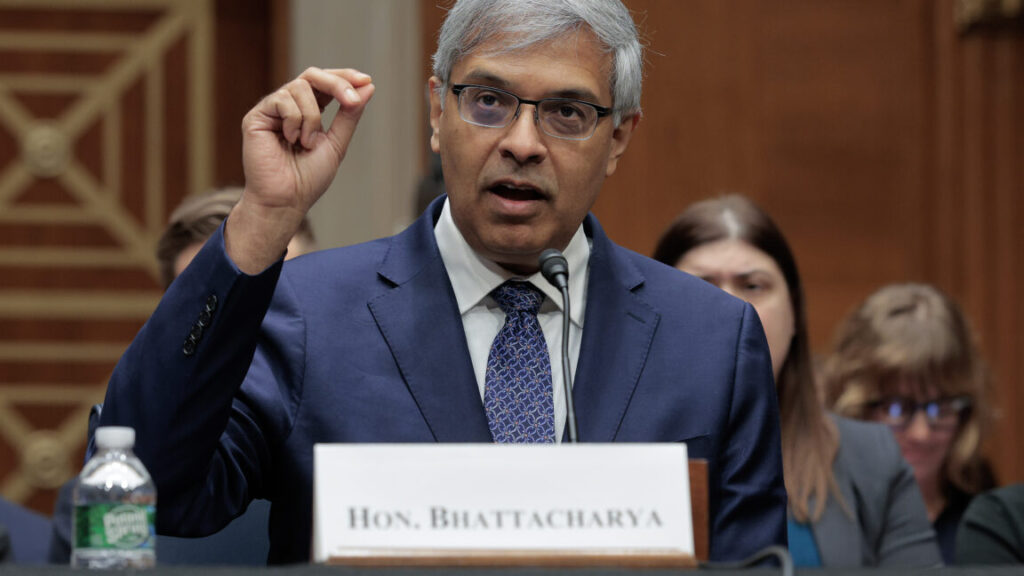
At the end of January, Washington, DC, saw an extremely unusual event. The MAHA Institute, which was set up to advocate for some of the most profoundly unscientific ideas of our time, hosted leaders of the best-funded scientific organization on the planet, the National Institutes of Health. Instead of a hostile reception, however, Jay Bhattacharya, the head of the NIH, was greeted as a hero by the audience, receiving a partial standing ovation when he rose to speak. Over the ensuing five hours, the NIH leadership and MAHA Institute moderators found many areas of common ground: anger over pandemic-era decisions, a focus on the failures of the healthcare system, the idea that we might eat our way out of some health issues, the sense that science had lost people’s trust, and so on. And Bhattacharya and others clearly shaped their messages to resonate with their audience. The reason? MAHA (Make America Healthy Again) is likely to be one of the only political constituencies supporting Bhattacharya’s main project, which he called a “second scientific revolution.” In practical terms, Bhattacharya’s plan for implementing this revolution includes some good ideas that fall far short of a revolution. But his motivation for the whole thing seems to be lingering anger over the pandemic response—something his revolution wouldn’t address. And his desire to shoehorn it into the radical disruption of scientific research pursued by the Trump administration led to all sorts of inconsistencies between his claims and reality. If this whole narrative seems long, complicated, and confusing, it’s probably a good preview of what we can expect from the NIH over the next few years. MAHA meets science Despite the attendance of several senior NIH staff (including the directors of the National Cancer Institute and National Institute of Allergy and Infectious Diseases) and Bhattacharya himself, this was clearly a MAHA event. One of the MAHA Institute’s VPs introduced the event as being about the “reclaimation” of a “discredited” NIH that had “gradually given up its integrity.”
Continue reading the complete article on the original source