The Ukrainian flag wrapped around her shoulders and its colors painted on her left cheek, Olha Scherhyna stood near the top of the Cortina Curling Center and pointed her phone at the big board announcing the start list for the men’s skeleton.
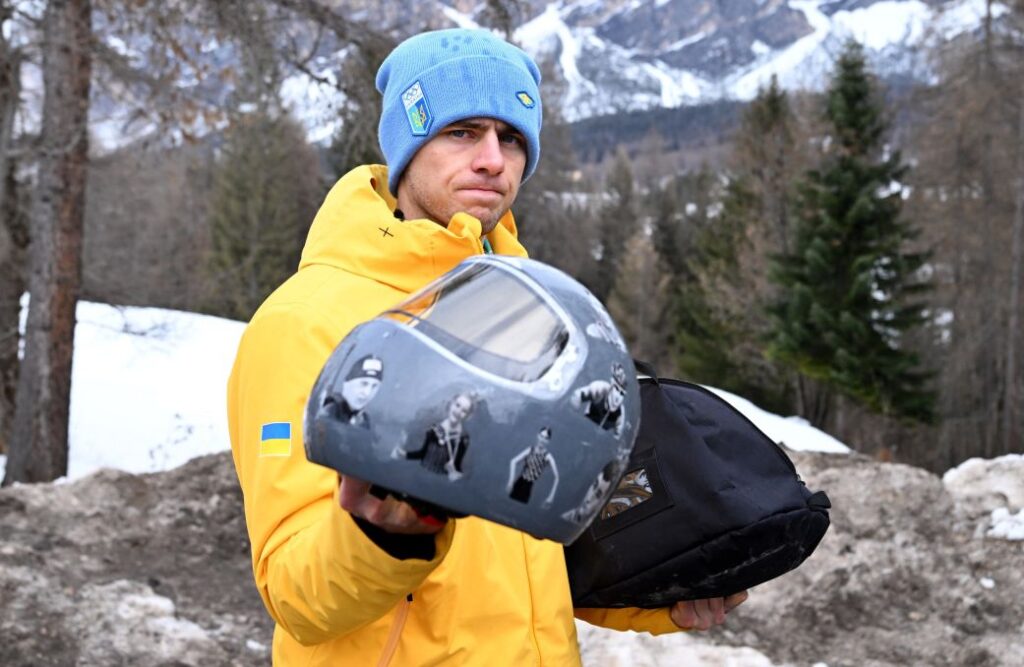
Minutes earlier, the International Olympic Committee had announced that Ukrainian slider Vladyslav Heraskevych had been disqualified from the men’s skeleton for insisting that he would wear a helmet on which he depicted athletes who had been killed in the war with Russia. As the starters scrolled in front of Scherhyna on the board, a red DNS stood next to Heraskevych at the same time an announcer said he would not start.
Using a translate app on her phone to share her opinions, Scherhyna needed no help to convey her emotions. She brought her fists to her eyes, to indicate sobbing, before real tears fell down her cheeks. She then reached into the pocket of her white jacket and pulled out a black armband, motioning to me to tie it around her jacket.
On her app she wrote, “For Ukraine, he is already a winner.’’
The IOC and Heraskevych have been in a standoff since Tuesday, when, during a training run, the slider wore his helmet honoring those slain since Russia invaded Ukraine. The organization said it violated its guidelines on athlete expression. Rule 50.2 of the Olympic Charter, which provides for the “protection of neutrality,” states that “no kind of demonstration or political, religious or racial propaganda is permitted in any Olympic sites, venues or other areas.’’ He has appealed the decision.
Continue reading the complete article on the original source