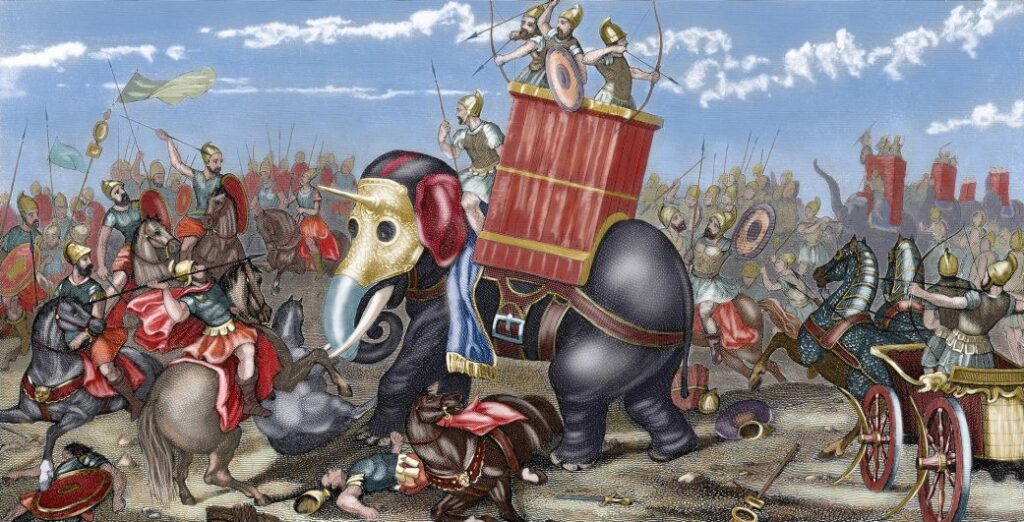
Archaeologists in Spain have uncovered an elephant bone from 2,200 years ago, and they believe it belonged to an animal that served as a “war machine” in an army sent to invade the Roman Republic.
After discovering the ankle bone at the Colina de los Quemados archaeological site in the city of Cordoba in southern Spain, researchers used radiocarbon dating to ascertain that it belonged to an elephant that lived around the early fourth to late third century BC, according to a study published in the Journal of Archaeological Science: Reports.
Around this time, the city-state of Carthage, in what is now Tunisia, was battling with the Roman Republic for supremacy in the Mediterranean.
The Carthaginians were known to use elephants as “war machines” in their armies, according to the research, and classical accounts suggest the famed commander Hannibal had driven a troop of 37 elephants through modern day Spain and France, ultimately attempting to invade Italy by crossing the Alps during the Second Punic War, which took place from 218 to 201 BC.
The incredible sight of Hannibal’s elephants left its mark on the historical record, but no direct physical evidence of their presence in Western Europe had previously been discovered.
Continue reading the complete article on the original source