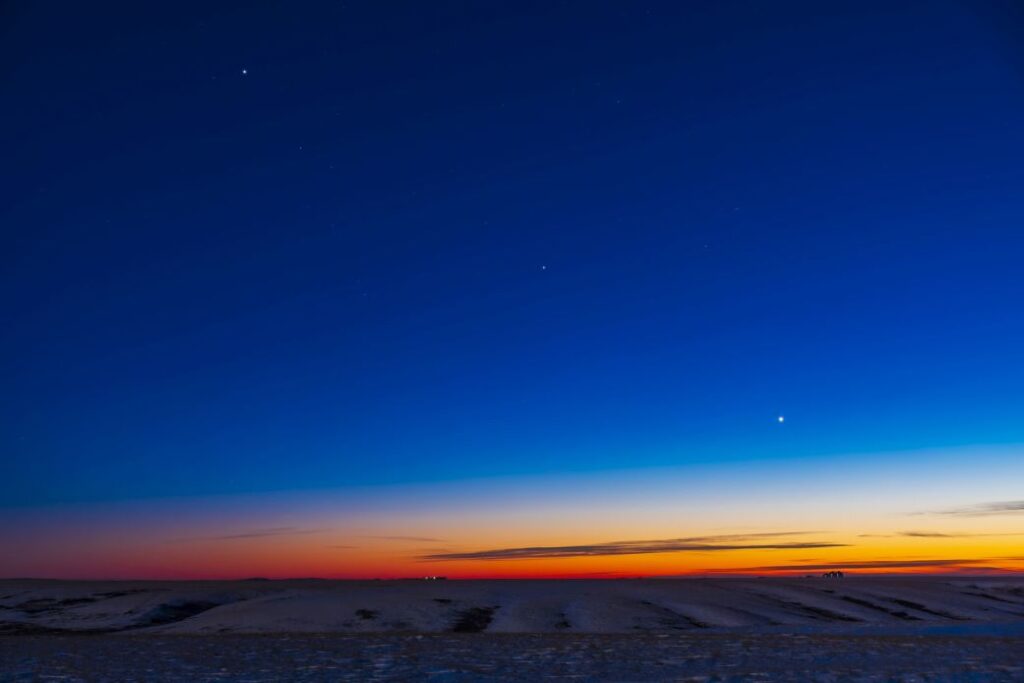
Sky-gazers will have the opportunity to see six planets in the sky on Saturday, weather permitting, according to NASA.
This planetary parade occurs due to the alignment of the planets’ orbits around the sun, said Heidi Haviland, a planetary scientist at NASA’s Marshall Space Flight Center in Huntsville, Alabama.
Mercury, Venus, Saturn and Jupiter will be visible to the naked eye, whereas Uranus and Neptune will require binoculars or a telescope, according to NASA. Viewers do not have to worry about wearing protective eyewear as they would to watch a solar eclipse.
The event is visible anywhere on Earth — with best views at twilight. Early birds should try to glimpse the planetary parade before sunrise, and for night owls the best visibility will be right after sunset, Haviland said.
The best viewing times vary by location, however, she explained via email. The planets need to be roughly 10 degrees or higher above the horizon to be visible. If they are too low, they will be obscured by Earth’s atmosphere, she added.
Continue reading the complete article on the original source