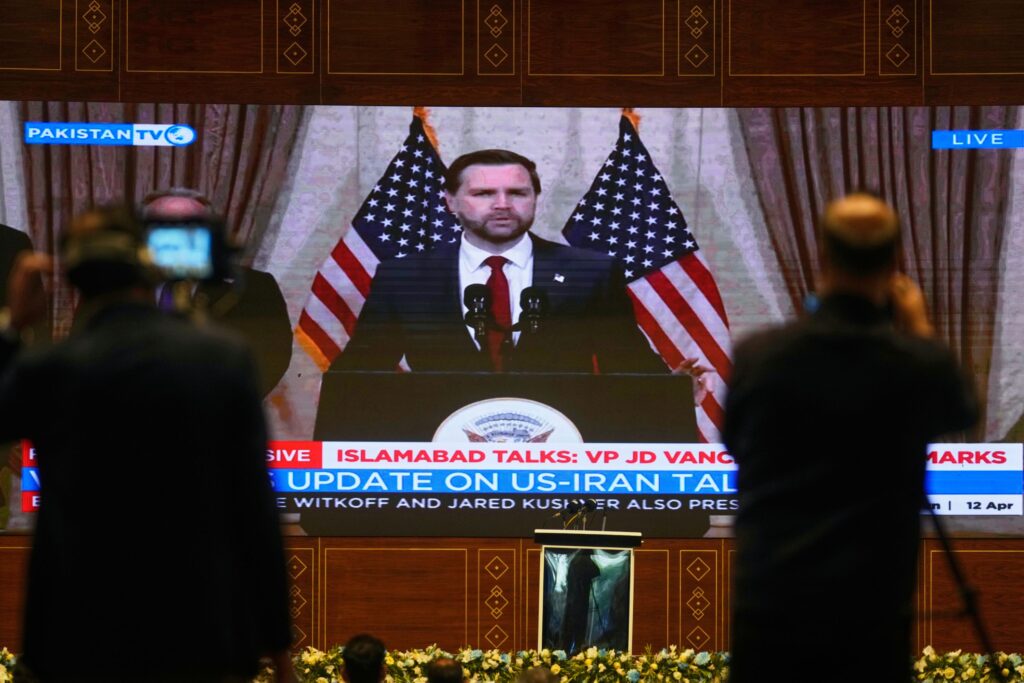
We watched the sun go down in Islamabad and then come up again as these marathon talks went on. To end without a deal marks a fundamental blow to nascent hopes of finding an off-ramp to this crisis.
These were meetings of huge consequence –– the highest-level talks between US and Iranian officials since the formation of the Islamic Republic in 1979 –– and it’s hard to underestimate just how complex the discussions have been.
Beyond what was said in the room, technical papers were exchanged and reviewed repeatedly. But the two sides were simply too far apart, not just in substance, but in style and temperament. The respective delegations went into these talks with vastly different approaches: US Vice President JD Vance appeared to be after a relatively quick solution after the implementation of a two-week ceasefire, but Tehran typically moves much slower, negotiating over the long term.
With Vance saying America has put forward its “best and final” offer, the ball now seems to sit firmly in the Iranian court. And if there are going to be more talks, Iran will have to change its position somehow.
Iran believes the talks failed because of “excessive” US demands, and it’s clear from both sides that nuclear enrichment is a key sticking point. Tehran has insisted for years it would not build a nuclear weapon and that it only wished to pursue a nuclear power program, but its actions ramping up the level of enrichment of uranium in recent years caused great concern in the West — and were the catalyst for last year’s 12-day conflict with Israel. Iran still appears unwilling to give up on enrichment. The White House wants a cast-iron commitment that Iran won’t build a nuclear weapon.
Continue reading the complete article on the original source