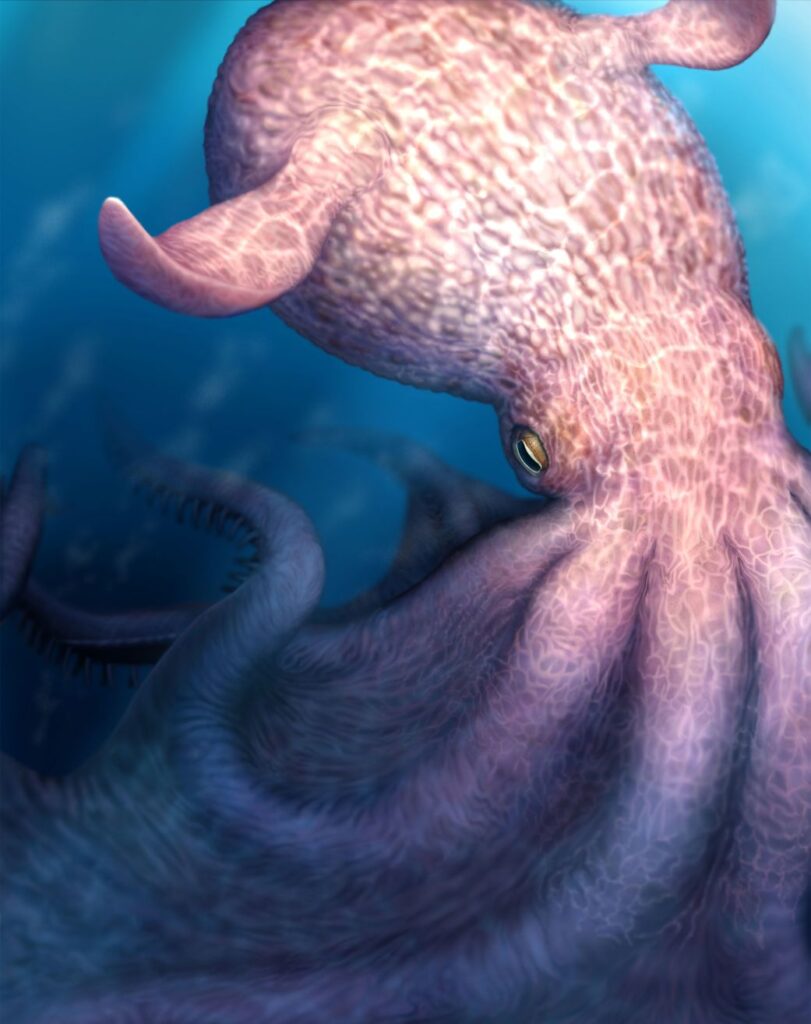
Giant octopuses measuring up to 62 feet (19 meters) in length were among the top ocean predators around 100 million years ago, according to new research that uncovered rare fossils hidden within solid rock.
Remarkably well-preserved specimens of the octopuses’ powerful jaws show signs of intense wear from crushing hard prey including shells and bones, a study published in the journal Science on Thursday reports.
“This suggests that these giant octopuses may have functioned as apex predators in the Cretaceous sea,” study coauthor Yasuhiro Iba, an associate professor of Earth and planetary sciences at Japan’s Hokkaido University, told CNN.
“We were surprised. The fossil record of octopuses is extremely limited, so finding animals this large and ecologically important in the Cretaceous ocean was beyond our expectations,” he added.
The extinct animals, scientifically named Nanaimoteuthis, were about 23 to 62 feet (7 to 19 meters) in length. The researchers estimated their overall size by extrapolating from the size of the beak specimens.
Continue reading the complete article on the original source