EDITOR’S NOTE: This article was originally published by The Art Newspaper, an editorial partner of CNN Style.
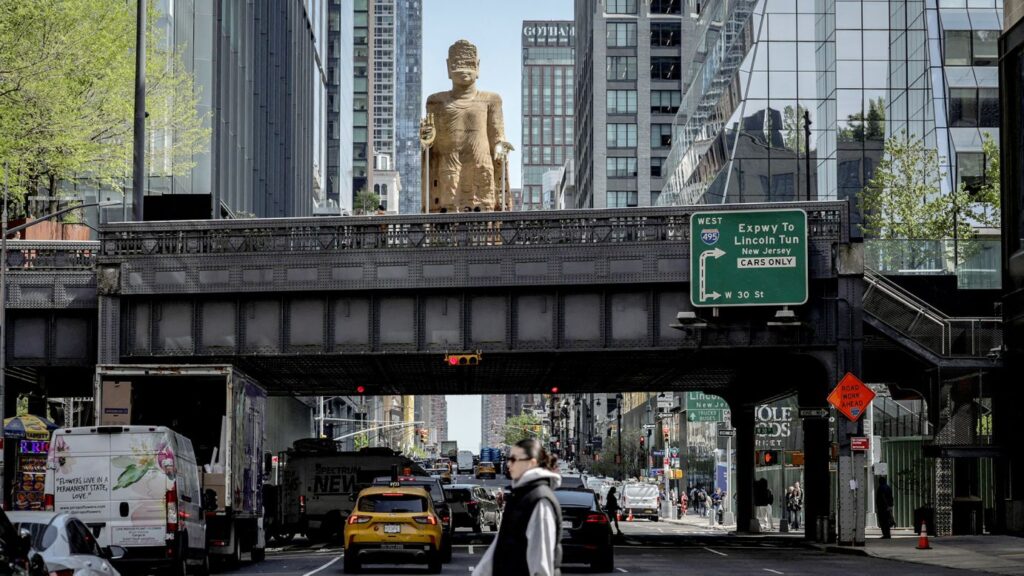
For the next year and a half, visitors to the ultra-modern Hudson Yards development on Manhattan’s far west side will be met by an icon of the ancient world. The fifth commission for the plinth on the High Line elevated park is an homage to the Buddhas of Bamiyan, the pair of 6th-century colossi in central Afghanistan that the Taliban blew up in 2001.
The new sculpture is by the Vietnamese American artist Tuan Andrew Nguyen and is titled after the nickname locals in the Bamiyan Valley gave to the larger of the two Buddhas, “Salsal,” which translates to “the light shines through the universe.”
“I hope this work becomes a site of inquiry and memory,” Nguyen said of his 27-foot-tall sandstone monument. “It wasn’t intended to speak about this moment, but unfortunately it does resonate with what is happening in today’s wars.”
His sculpture is not an exact replica of either of the Bamiyan Buddhas but is largely made of the same material: carved sandstone. The original Buddhas’ hands were destroyed centuries ago in an earlier act of iconoclasm; Nguyen has created two monumental steel hands that float slightly away from the sandstone limbs, supported by tall rods. They make gestures symbolizing fearlessness and compassion, and are cast from melted-down artillery shells sourced from Afghanistan — a process connected to Nguyen’s artistic practice of turning unexploded ordinances from the Vietnam War into vessels of memory and healing.
Continue reading the complete article on the original source