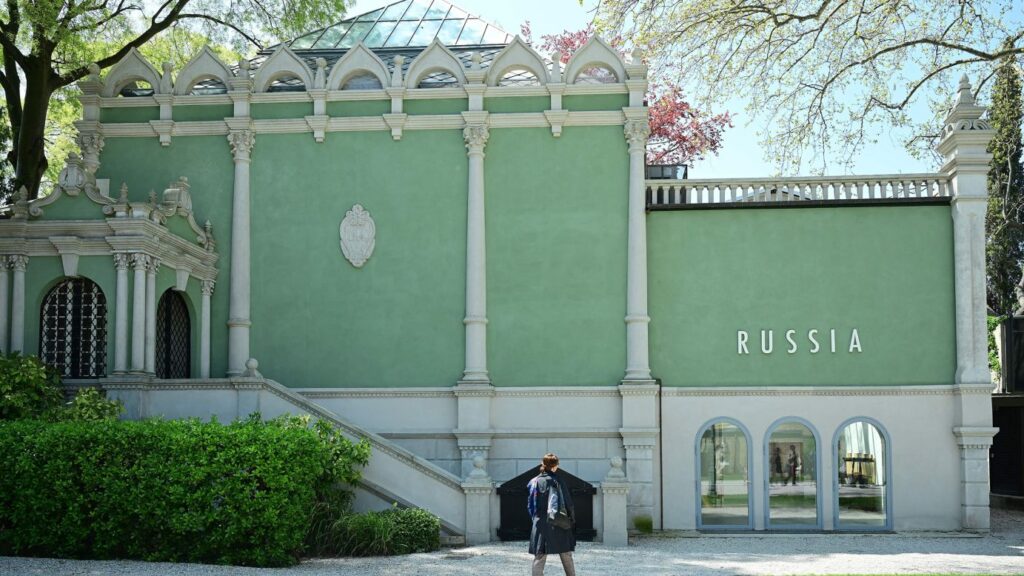
When the world’s most prestigious international art exhibition, the Venice Biennale, opens next week, it will do so amid a series of crises.
It will not receive its customary blessing from Italy’s minister of culture Alessandro Giuili who, along with a growing number of people and organizations, is furious over Russia’s return to the event during its war with Ukraine. More than 200 participating artists, curators and workers signed an open letter last month demanding the Venice Biennale exclude Israel’s pavilion over human rights abuses in Gaza. Another letter followed, which included the United States for its war in Iran. Most recently, after its five-person jury abruptly resigned on Thursday, the Biennale’s illustrious awards program will be replaced by two Visitors’ Prizes, with voting open to members of the public who attend the official exhibitions.
Now in its 61st year, the Biennale is a massive, global presentation of contemporary art from 99 nations, exhibited largely in permanent national pavilions dotted around Venice’s Giardini della Biennale. The Biennale typically offers a series of juried Gold and Silver Lions for both winning pavilions and individual participating artists. Jurors have resigned before, such as in 1968, whey they abandoned their positions in solidarity with widespread student protests.
However, the culture minister’s absence from the official opening ceremony will be a notable first in the history of the Biennale, which opens May 9. Instead of leading inaugural proceedings, Giuli announced he would be sending inspectors to the main venue to “gather information on the reopening of the Russian Pavilion,” a spokesperson told CNN.
While the Biennale has often had world politics play out among its pavilions, this year’s exhibit was explicitly positioned to reflect the current geopolitical landscape. Koyo Kouoh, who had been chosen as chief curator — the first African woman to hold the role — had put together the frameworks of the exhibition “In Minor Keys,” before being diagnosed with an aggressive cancer, of which she died last year at age 57.
Continue reading the complete article on the original source