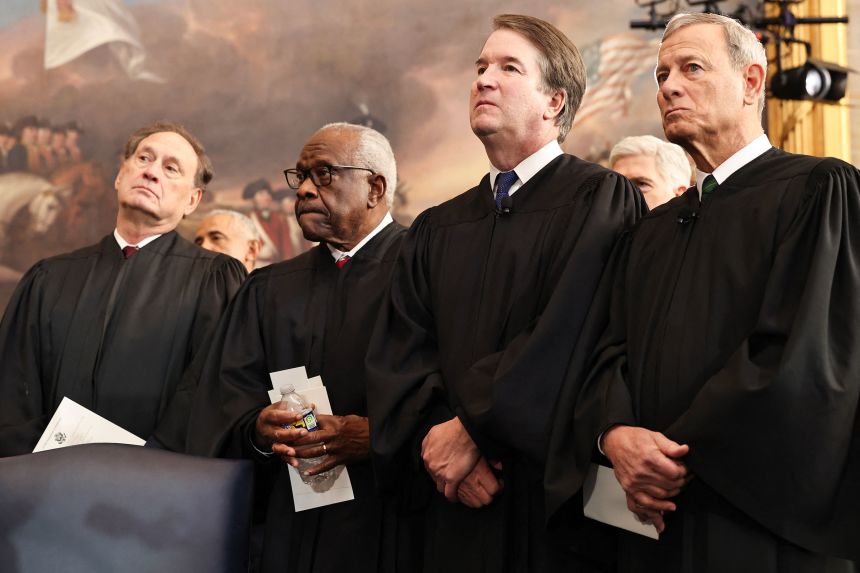
As the Supreme Court was barreling toward the final weeks of its term last year, Chief Justice John Roberts made a rare public appearance to defend his colleagues from criticism that they were all too eager to kick decades-old precedent to the curb.
Still bruising from anger on the left over the court’s monumental decision three years earlier to overturn Roe v. Wade, Roberts rattled off a series of stats underscoring that his court — the Roberts court — had taken aim at far fewer precedents than any of its modern predecessors, an average of less than two “overrulings” each year.
“I think people have a misunderstanding about how much the current court is overruling precedent,” Roberts told an audience at Georgetown University Law Center.
But just 10 days after he walked offstage, the Supreme Court let stand President Donald Trump’s firing of two senior labor officials despite a 1935 precedent known as Humphrey’s Executor that for decades has protected the leaders of independent agencies from dismissal by a president without cause.
Critics of the Supreme Court’s blockbuster decision Wednesday gutting a key provision of the Voting Rights Act of 1965 and voiding a Louisiana congressional map say the court did the same thing: effectively overturned decades-old precedent while not explicitly saying it was doing so.
Continue reading the complete article on the original source