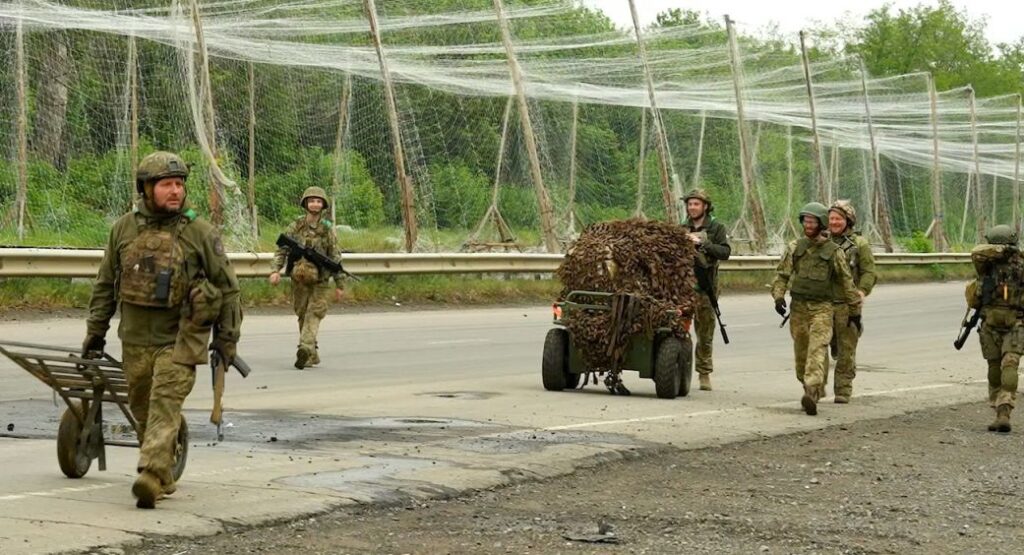
The “Road of Life” – pockmarked, laden with torched vehicles and covered with netting to block drones – fights its name. A lifeline resupplying Ukrainian troops on the toughest of front lines, sometimes by robotic delivery, the stretch of asphalt from Druzhkivka to Kostyantynivka is purely about survival.
Ukrainian troops, often emerging exhausted after months pinned down in the same position, move almost exclusively by foot, passing the burned-out vehicles of those who chose to try to dodge the drones with speed, rather than by being small.
Drones now rule the war in Ukraine and the only protection from Russia’s endless stream of aerial attacks is to hide in the trees, shoot them down, or ultimately hope they decide on another, bigger target – normally vehicles, or military equipment.
It’s a technological shift that’s reconfigured modern warfare and, for now at least, given Ukraine breathing room against a much larger adversary. But for troops operating in the so-called “kill zone,” extending miles deep along the front lines, every move in the open risks lethal peril.
The CNN team walked a small, supposedly safer section of the road between two Ukrainian positions, accompanied by Kosta, Sasha and Bohdan, from the 24th Mechanized Brigade. An hour’s proposed walk each way turned into a five-hour ordeal, with at least 14 attacks from, or close encounters with, Russian drones.
Continue reading the complete article on the original source