Aaron Sandel can pinpoint when it all started.
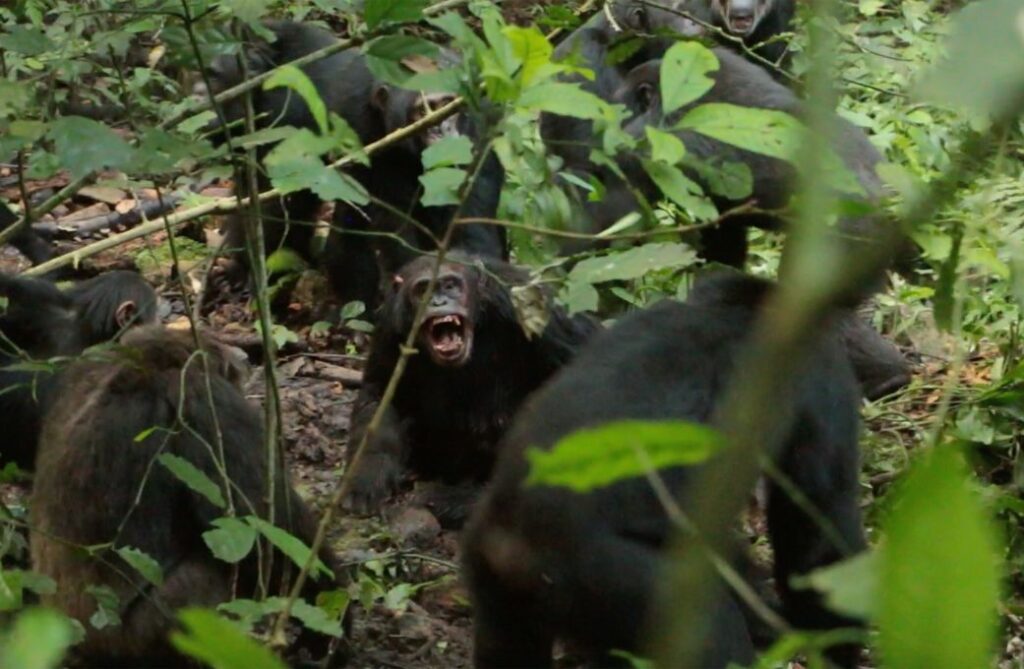
The codirector of the Ngogo Chimpanzee Project had been observing a group of apes on June 24, 2015, in Uganda’s Kibale National Park, where the project is located, when he suddenly noticed the chimps fall silent. Several began grimacing, a facial expression indicating they were nervous. Others started touching each other for reassurance.
In the distance, more chimps could be heard, but it wasn’t anything unusual. For at least two decades, the Ngogo chimpanzees had formed a considerably large community, with more than 200 individuals living together in harmony at its peak.
But when Sandel saw more chimps appear, the primates did not reunite in their typical fashion of loud screaming, pats on the back and holding hands. Instead, a number of chimpanzees took off running, leaving Sandel and fellow researcher John Mitani puzzled. The once close-knit group of chimps were suddenly treating each other like strangers.
“I remember asking John, ‘What’s going on?’ He said, ‘I don’t know,’” Sandel recalled. “And that also stuck with me, because this is one of the world’s experts on chimps. He’d studied these chimps for two decades. But we were seeing something new.”
Continue reading the complete article on the original source