EDITOR’S NOTE: This CNN Travel series may have adjacent ads by the country it highlights. CNN retains full editorial control over subject matter, reporting and frequency of the articles and videos, in compliance with our policy.
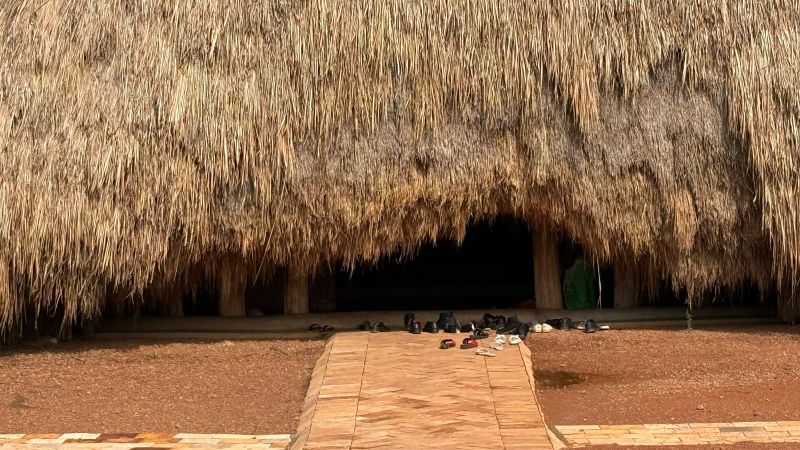
Walking through the compound that houses the Kasubi Tombs, the main path leads to what should be an entrance. But it ends at one of the layers of thatch covering the 25-foot structure known as Muzibu Azala Mpanga. It looks like a giant basket turned upside down. If it weren’t for the rows of shoes laid neatly outside, you’d never know there was a way in.
Brush aside the long-dried spear grass, and you’re in another world. Uganda’s equatorial heat is left outside; inside, a double-layered ceiling of woven reeds and grass regulates the temperature, keeping the air cool and still. Women sit on grass mats on either side of the entrance — “widows” of the dead kings, descendants of the royal family who serve one-month shifts to welcome pilgrims and tend to the spirits of the kings behind the curtain.
Pilgrims kneel in front of four photographs, one for each king buried here. Behind them hangs a floor-to-ceiling curtain of rust-brown bark cloth, the distinctive Ugandan textile made from pounding the bark of a local fig tree.
The curtain looks like a wall. But for people from the Buganda kingdom, it marks a portal to a sacred, invisible forest. They believe kings never die; they enter the forest and continue to communicate with the living through spirit mediums.
Continue reading the complete article on the original source