EDITOR’S NOTE: In Snap, we look at the power of a single photograph, chronicling stories about how both modern and historical images have been made.
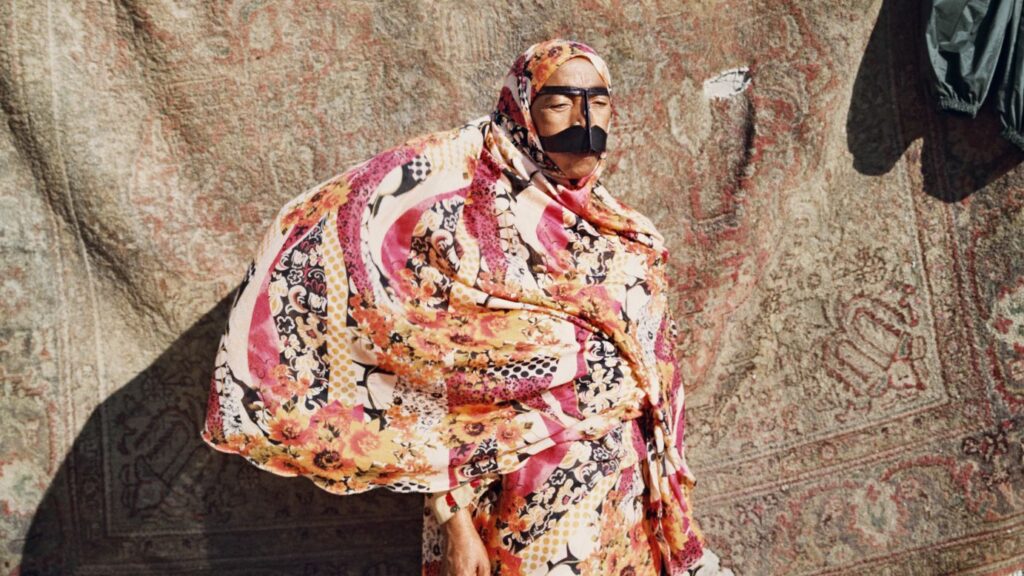
Salimeh stands in her yard, a rug suspended behind her, still heavy from washing. Her clothes, patterned in vivid reds, pinks and oranges, echo the mineral-rich sands of Iran’s Qeshm and Hormuz islands, where the earth itself seems to glow. The wind lifts her veil, just enough to show its gentle presence, and it billows out across her body. She’s caught, mid-motion, in the exact moment of its arrival.
Photographer Hoda Afshar recalls the image as something almost accidental. Working with a medium-format analog camera, she had been adjusting, focusing, waiting. Salimeh stood patiently. Then the wind came and she pressed the shutter.
Afshar has been returning to Iran’s southern islands of Hormuz and Qeshm since 2015, photographing the land, its residents and the invisible, esoteric forces that shape life there — the winds, which locals believe to be powerful entities.
Their belief runs through the islands like an undercurrent. Some winds are considered benign; others harmful. One type of wind known as zār, can, they say, enter the body and cause distress or illness.
Continue reading the complete article on the original source