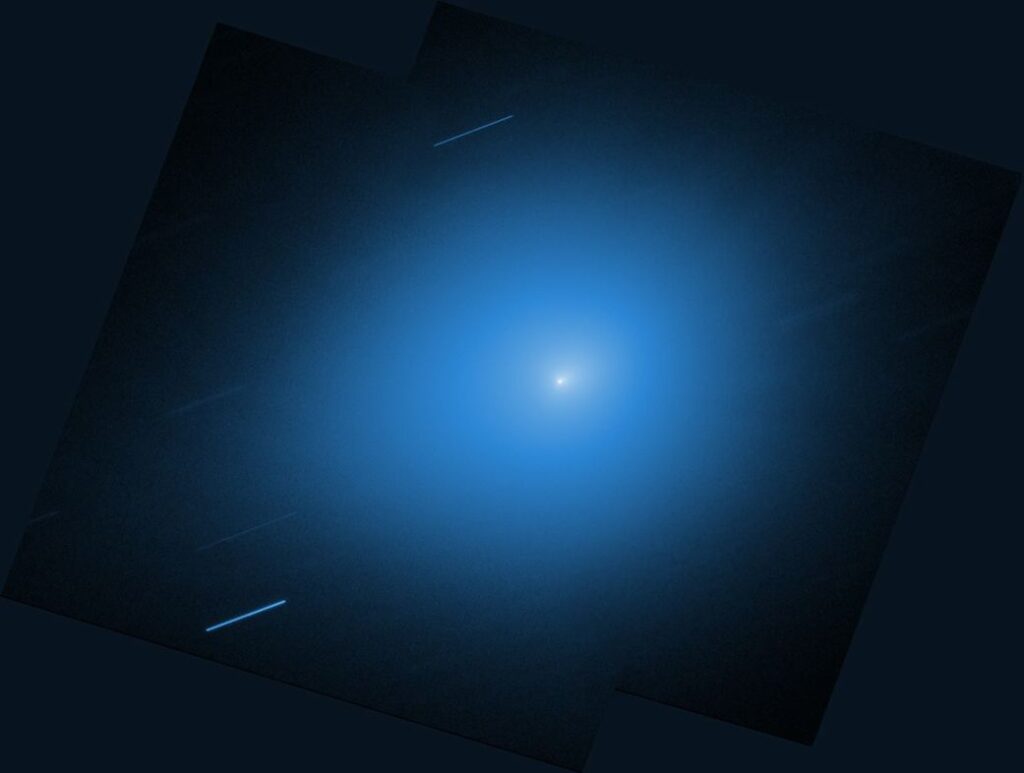
Astronomers using radio telescope observations to get an inside look at an interstellar comet have gleaned new insights into when and where the celestial object formed.
The comet, named 3I/ATLAS, gained global attention when researchers first discovered it zipping through our solar system in July. It’s only the third interstellar object, or celestial body that originated outside our solar system, to be spotted passing through our corner of the universe. The comet began its exit of our solar system in December.
Initial research about the comet’s composition, published April 23 in the journal Nature Astronomy, shows that it originated somewhere very different from our own solar system, according to the study authors.
The observations were made using the Atacama Large Millimeter/submillimeter Array, or ALMA, in Chile in early November, just days after the comet passed closest to our sun.
The ALMA radio telescope enabled researchers to measure deuterium within the comet, marking the first time this isotope of hydrogen has been detected in an interstellar object.
Continue reading the complete article on the original source